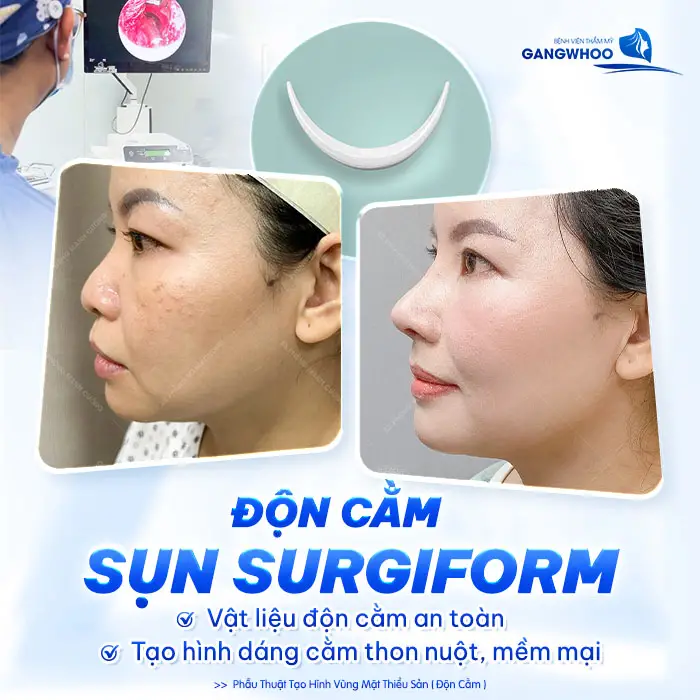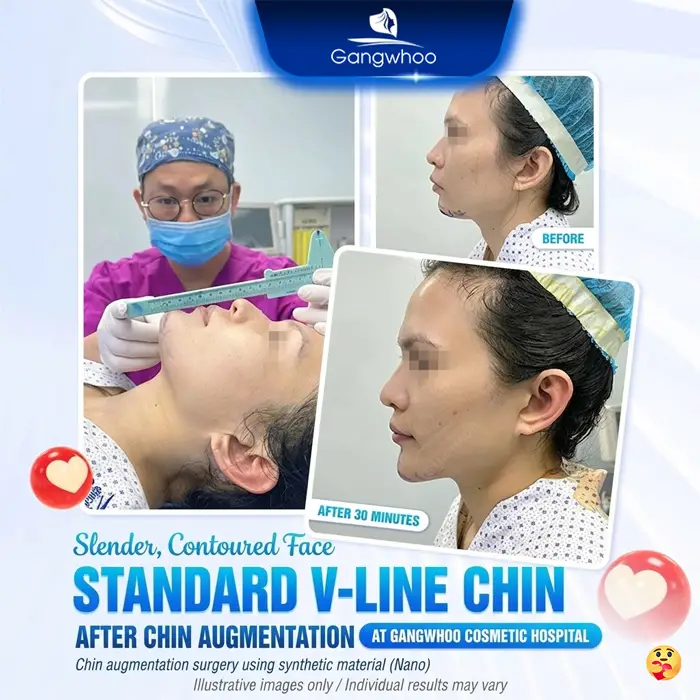



What should I do if my chin implant is misaligned? This is an issue that causes concern for many people after undergoing chin augmentation surgery, especially when they notice that the chin is no longer positioned along the midline of the face, the chin tip tends to shift to one side, or the shape of the chin changes abnormally.
However, not every case in which the chin appears misaligned after surgery means that the chin implant has shifted out of position. During the early postoperative period, swelling, bruising, and uneven soft-tissue edema between the two sides may temporarily make the face appear asymmetrical.
From a Maxillofacial perspective, the most important thing when encountering this condition is not to manually manipulate or reposition the chin, but to determine the cause of the asymmetry before deciding whether intervention is necessary.
What Should I Do If My Chin Implant Is Misaligned?

If you notice that your chin is misaligned after chin augmentation, the first thing to do is remain calm and assess when the condition appeared and whether there are any accompanying symptoms.
During the first days or weeks after surgery, the soft tissue around the chin is usually not yet completely stable. Swelling on the two sides may be uneven, causing the jawline and chin tip to appear temporarily misaligned. If the condition is gradually improving as recovery progresses and no other abnormal signs appear, the doctor may recommend continued monitoring and postoperative care.
Conversely, if the chin is clearly misaligned, the condition does not improve, or the asymmetry becomes increasingly pronounced, a follow-up examination is necessary so that the doctor can assess the position of the implant, the surrounding soft tissue, and the condition of the surgical site.
In particular, patients should not use their hands to push the implant back into its original position, massage forcefully, press on, or manipulate the chin. Incorrect mechanical forces applied at the wrong time may damage healing tissue and make the condition more complicated.
At Gangwhoo Cosmetic Hospital, assessment of issues involving the chin should be based on a direct examination and each individual’s specific condition, rather than relying solely on photographs or subjective perceptions.
Why Does Chin Augmentation Become Misaligned?

There are many possible causes of an uneven chin after augmentation. Accurately identifying the cause is important because each cause requires a different approach to management.
1. Postoperative Swelling Makes the Chin Appear Misaligned
This is a situation that needs to be distinguished from implant displacement.
After surgery, the inflammatory response and natural healing process may cause soft-tissue edema. The degree of swelling on the two sides does not necessarily have to be the same. When one side is more swollen, the chin contour may appear to be pulled toward the opposite side.
During this stage, assessing the aesthetic result too early may lead to an inaccurate conclusion. The doctor generally needs to monitor the changes over time to distinguish postoperative swelling from an actual problem related to the position of the implant.
2. The Chin Implant Has Shifted From Its Original Position
Another possible cause is that the implant is no longer in its intended position.
Anatomically, the chin area is closely associated with the mandibular bone, periosteum, mentalis muscle, and overlying soft tissues. When the implant changes position, the shape of the chin tip and the contour of the mentum area may also change.
The patient may notice that the chin shifts to the left or right, that the chin tip is not positioned along the facial midline, or that the chin area feels less stable than before.
However, implant displacement cannot be concluded solely from the appearance of a misaligned chin. The doctor needs to perform a direct assessment to determine whether the issue involves the soft tissue, the position of the implant, or the underlying bone structure.
3. The Implant Was Positioned Inappropriately for the Chin Anatomy
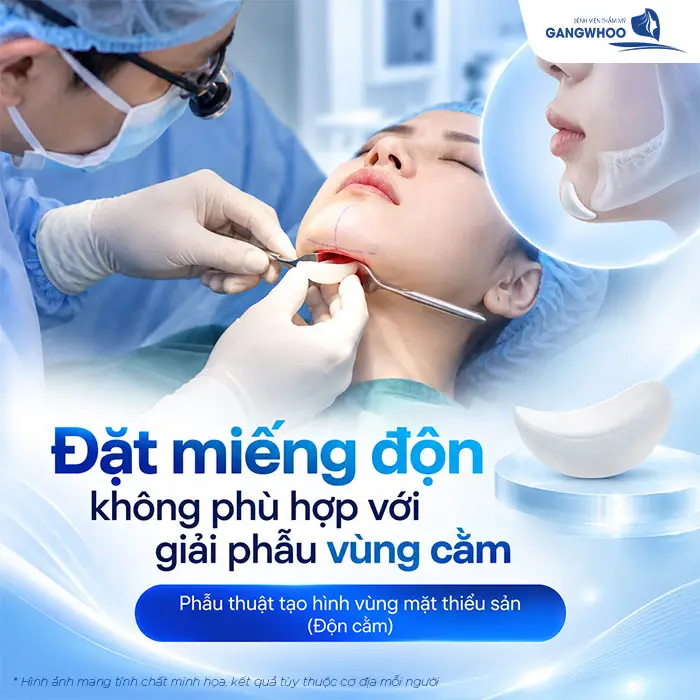
Every face has different anatomical characteristics. Chin symmetry depends not only on the size of the implant but also on the morphology of the mandible, bilateral facial relationships, occlusion, chin projection, and proportions of the lower third of the face.
If the design and positioning of the implant are not appropriate for the anatomy, the postoperative result may not achieve the desired symmetry.
This is also why, in aesthetic chin surgery, the doctor should not assess only the chin tip but should evaluate the face and maxillofacial structures as a whole.
3. Impact or Trauma to the Chin Area

During the postoperative period, the soft tissue and structures in the treated area need time to stabilize. Strong impacts, trauma, or prolonged pressure on the chin may affect the recovery process.
Therefore, patients who have recently undergone chin augmentation should follow postoperative care instructions and attend follow-up appointments as scheduled.
4. Abnormal Problems During the Healing Process
In addition to aesthetic concerns, an abnormal change in the chin may be associated with postoperative problems that require medical evaluation.
If chin asymmetry is accompanied by increasing pain, unusual swelling and redness, warmth at the surgical site, abnormal discharge, fever, or changes in the incision, the patient should contact a medical facility for evaluation rather than continuing to monitor the condition independently for an extended period.
How Can You Tell Whether the Chin Is Misaligned Due to Swelling or the Implant?
This is one of the most important questions when managing a condition of misaligned chin augmentation.
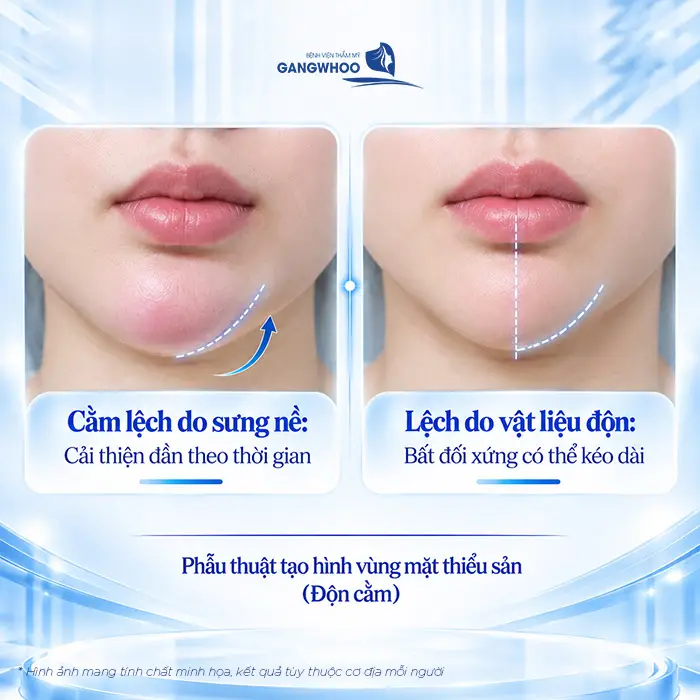
Chin asymmetry caused by edema usually occurs during the early recovery period. The shape of the face may change according to the degree of swelling and tends to improve as the swelling subsides.
In contrast, if the issue is actually related to the position of the implant, the asymmetry may persist more clearly and fail to improve as the swelling decreases.
However, these are only indicative signs. Patients should not self-diagnose that “the chin is misaligned because the implant is displaced,” or vice versa.
In clinical practice, the doctor needs to evaluate the soft tissue, position of the chin tip, facial midline, bilateral jaw relationship, and implant position. Depending on the case, the doctor may recommend additional imaging if necessary to obtain a more accurate basis for assessment.
How Is a Misaligned Chin Corrected?

1. Observation If the Cause Is Postoperative Edema
If the doctor determines that the chin is primarily asymmetrical due to swelling and there are no signs indicating that the implant has shifted, an appropriate approach may be continued observation combined with proper postoperative care according to instructions.
During this period, patients should not rush to undergo revision simply because the result has not yet reached its final shape.
2. Adjustment When There Is a Problem With the Implant Position
If examination shows that the implant is not in the correct position or that the shape of the chin has been significantly affected, the doctor will assess the severity and cause before determining the appropriate management approach.
Not every case requires implant removal. Whether adjustment, repositioning, or replacement of the implant is necessary must be determined based on the actual condition.
3. Chin Revision Surgery
In cases where the chin is clearly misaligned or the result is unsatisfactory due to an issue related to the implant, revision surgery may be considered.
From a medical perspective, revision surgery is not simply a repetition of the initial chin augmentation procedure. The doctor needs to assess the condition of the soft tissue, scar tissue, implant position, underlying bone, and the cause that led to the previous outcome.
The goal of revision surgery is not only to restore the chin to a balanced position but also to minimize tissue damage and develop a treatment plan appropriate to each patient’s anatomical characteristics.
How Long After Chin Augmentation Can a Misaligned Chin Be Revised?
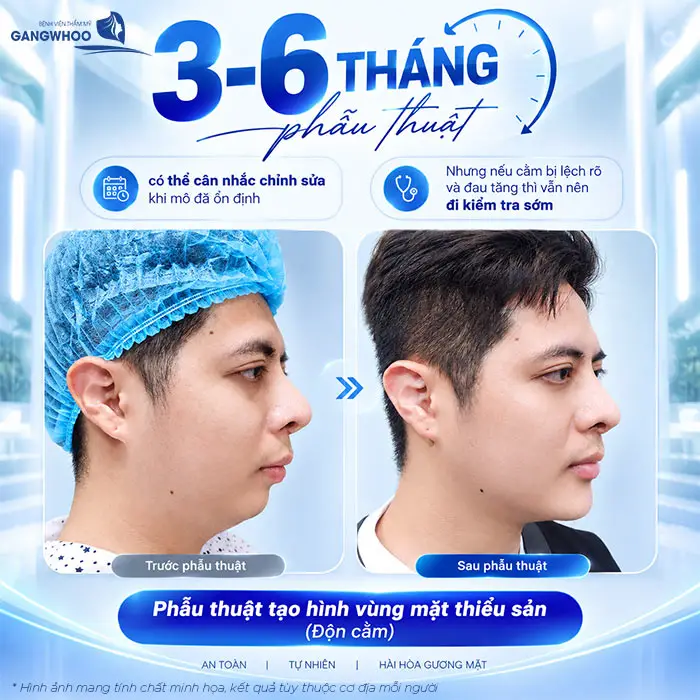
Typically, if the chin is only mildly asymmetrical due to postoperative swelling, the doctor may monitor the condition for approximately 4–8 weeks to allow the soft tissue to stabilize further before assessing the result more clearly. The shape of the chin may continue to change over approximately 3–6 months, depending on the individual healing response, surgical technique, and extent of intervention.
If implant displacement is suspected but there are no signs of infection or acute complications, the timing of revision surgery is generally considered after approximately 3–6 months. This period allows the soft tissue to reduce in swelling, the tissues around the surgical area to become more stable, and the doctor to accurately assess the cause before performing another intervention.
However, patients should not wait until the 3–6-month mark if abnormal signs such as increasing pain, swelling and redness, warmth in the chin area, abnormal discharge, wound dehiscence, or fever occur. In these cases, the patient should contact the doctor or medical facility for an early examination, as treatment may be required before the usual timing for aesthetic revision.
In cases where the chin is clearly misaligned due to implant displacement, causing pain, placing pressure on the soft tissue, or posing a risk of infection, the doctor may recommend earlier intervention. The specific timing should not be determined independently but should be based on a direct examination, the condition of the soft tissue, the implant position, and the cause of the asymmetry.
Where to Correct a Misaligned Chin with Reliable Results – Techniques to Minimize the Risk of Asymmetry
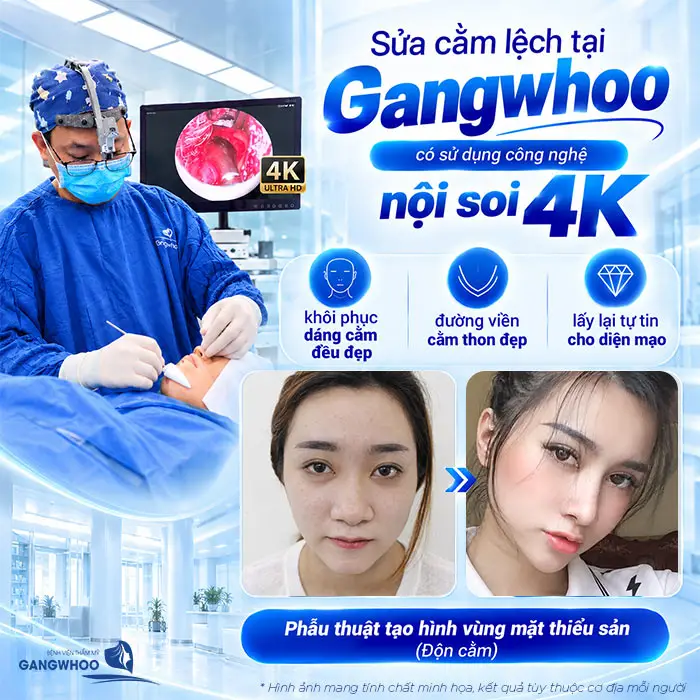
When chin augmentation becomes misaligned, choosing a surgeon with appropriate expertise and surgical technique plays an important role. At Gangwhoo Cosmetic Hospital, chin contouring and revision procedures are performed with the support of microsurgical techniques and a 4K endoscopic system, with the aim of improving visualization of the structures in the surgical area and assisting the surgeon in performing more precise procedures.
In appropriate cases, the chin implant may be secured to the underlying bone using specialized screws, helping increase stability and minimize the risk of implant displacement. However, the fixation technique selected is based on the mandibular bone structure, type of implant, and the actual condition of each individual.
In addition, the 4K endoscopic system provides magnification and clear visualization of the surgical field, while microsurgical techniques focus on precise manipulation and minimizing unnecessary tissue trauma. This combination aims to create a balanced and stable chin that is appropriate for the individual’s facial characteristics.
For patients who have previously experienced misaligned chin augmentation, the doctor needs to assess the cause, implant position, underlying bone, and soft tissue before deciding on revision. Dr. Nguyễn Minh Hiển, II Specialist, a Maxillofacial specialist at Gangwhoo Cosmetic Hospital, is one of the doctors working in this field.
Customer Images After Chin Augmentation at Gangwhoo Cosmetic Hospital
If you are experiencing misaligned chin augmentation, you can visit Gangwhoo Cosmetic Hospital for a direct assessment by a Maxillofacial specialist, to determine the cause and receive advice on an appropriate management approach based on your specific condition.