


In body contouring surgery, removing excess fat tissue requires not only liposuction techniques but also precise control during the treatment of subcutaneous tissue. VASER liposuction technology uses ultrasonic energy to assist in separating fat tissue before it is extracted, providing an additional option for refining body contours.
How does this technology work, and what are its advantages and limitations from a medical perspective?
What Is VASER Liposuction Technology?
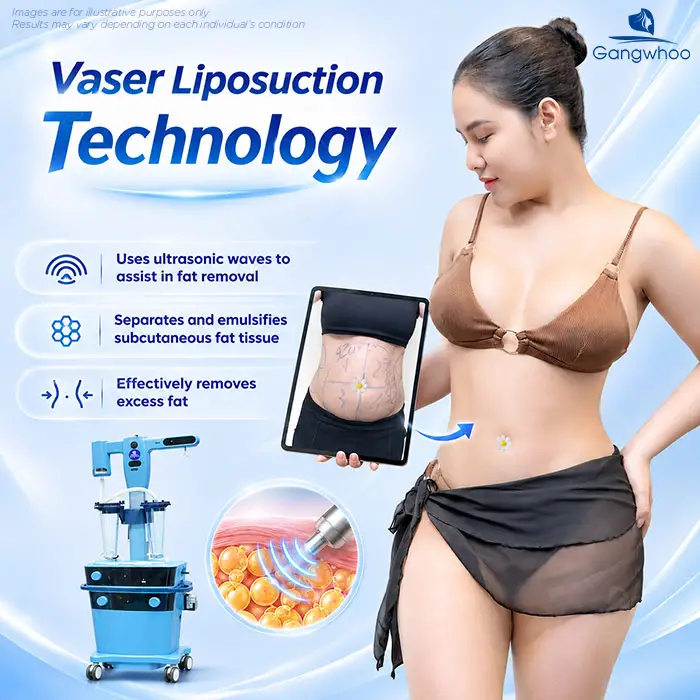
VASER (Vibration Amplification of Sound Energy at Resonance) is an ultrasound-assisted liposuction technology classified under Ultrasound-Assisted Liposuction (UAL). It uses ultrasonic energy transmitted through a specialized probe to help separate and emulsify subcutaneous fat tissue before the surgeon proceeds with fat extraction.
From an anatomical perspective, subcutaneous adipose tissue primarily consists of fat cells (adipocytes), which are organized into lobules separated by connective tissue septa. Within and around this structure are also blood vessels, nerves, and other soft tissue components. During liposuction, the surgeon must target the correct tissue layer while controlling the impact on adjacent anatomical structures.
The distinguishing feature of VASER is the addition of an ultrasonic energy application step before fat extraction. Rather than relying solely on the mechanical force of a cannula to disrupt and remove fat tissue, as in traditional liposuction, VASER assists in separating clusters of fat tissue, facilitating the extraction process according to the predetermined body contouring plan.
According to the technical documentation and instructions for use of the VASERlipo system, this technology is designed to fragment, emulsify, and aspirate subcutaneous fat tissue for body contouring purposes. It is a surgical intervention, not a non-invasive fat reduction technique or a treatment for obesity.
Operating Principle of VASER Liposuction Technology
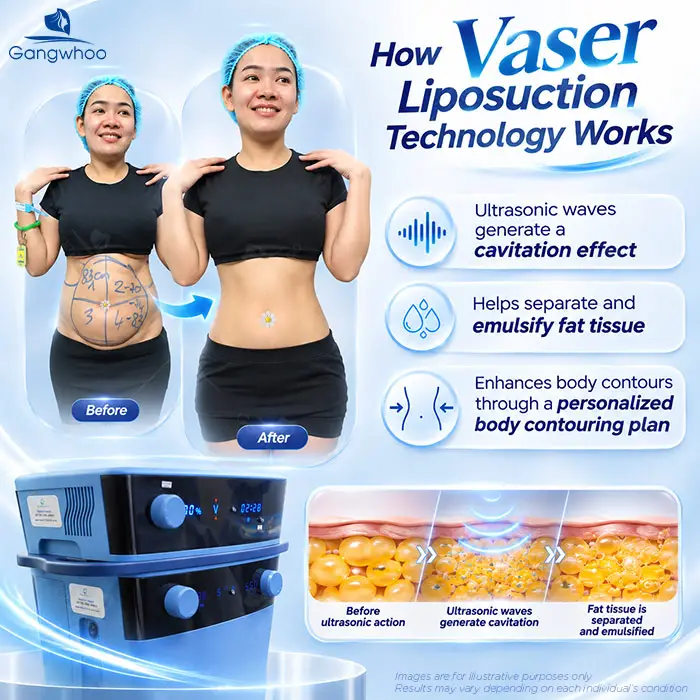
To understand how VASER assists in body contouring, it is important to examine how ultrasonic energy interacts with fat tissue during surgery. Essentially, the procedure consists of three stages involving the coordinated use of an infiltration solution, an ultrasonic probe, and a specialized aspiration system.
Injection of Tumescent Solution into the Adipose Tissue
Before using the ultrasonic probe, the surgeon typically injects Tumescent solution into the targeted adipose tissue. This is an infiltration solution used in liposuction techniques and may contain normal saline, local anesthetic agents, and vasoconstrictors in an appropriate formulation.
This solution helps infiltrate and distribute fluid throughout the tissue compartment, supports the application of ultrasonic energy, and may help reduce bleeding through the vasoconstrictive effects of its medication components when indicated. The volume, composition, and administration technique must be determined by the surgeon based on the surgical area, the patient’s health condition, and the anesthesia plan.
Ultrasonic Waves Assist in Fat Tissue Separation and Emulsification
After the solution has been distributed throughout the treatment area, the VASER probe is inserted into the subcutaneous tissue through a small incision. The probe delivers ultrasonic energy at the frequency and settings designed for the system, generating mechanical effects within the fluid environment of the tissue.
One mechanism associated with this technique is cavitation. Microbubbles form in the fluid environment and oscillate before potentially collapsing, generating mechanical effects that help separate the structural components of adipose tissue. As a result, clusters of fat cells are released and emulsified, facilitating the subsequent aspiration process.
However, it is important to understand that ultrasonic energy does not simply dissolve fat, as is often described in advertising. It is a form of energy applied under controlled conditions during surgery. If the exposure time, energy level, or probe manipulation is inappropriate, heat may accumulate and damage surrounding tissues. Therefore, surgeons must thoroughly understand the device’s operating principles, the anatomy of the treatment area, and techniques for controlling energy delivery.
Aspiration of Separated Fat Tissue
Once the fat tissue has been processed using ultrasonic waves, the surgeon uses a liposuction cannula connected to a specialized aspiration system to remove the fat tissue and fluid.
During this stage, the surgeon’s technique plays a crucial role. The cannula’s path, depth, direction of movement, and amount of fat removed must be controlled based on anatomical structures and body contouring goals. Excessive fat removal or uneven aspiration may result in depressions, protrusions, surface irregularities, and imbalanced body contours.
Therefore, VASER does not independently determine the body’s shape after surgery. The technology assists in processing fat tissue, while the contouring results still depend significantly on the surgeon’s assessment, technique, and experience.
Advantages of VASER Liposuction Technology in Body Contouring
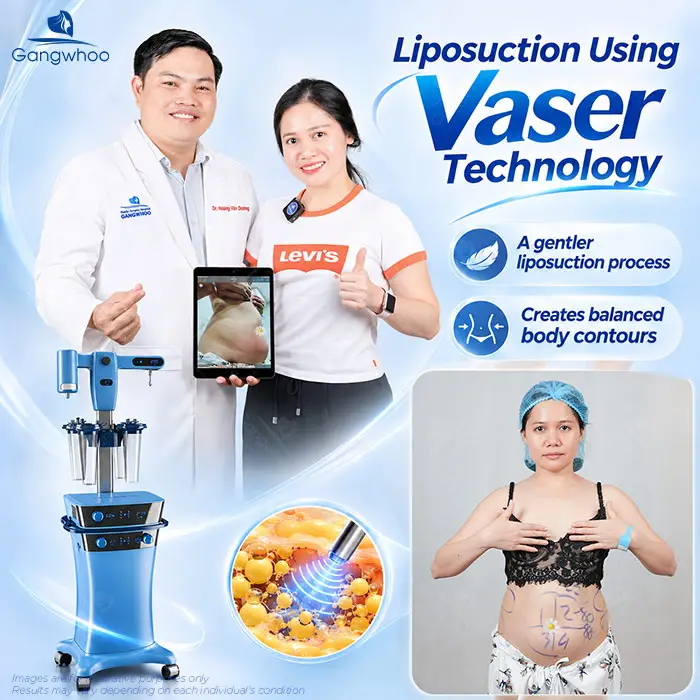
The application of ultrasonic waves in liposuction not only changes how fat tissue is processed but also expands the possibilities for refining body contours. When appropriately indicated and performed using proper techniques, VASER technology may offer several notable advantages.
More Efficient Fat Removal in Terms of Surgical Technique
Ultrasonic energy disperses and emulsifies clusters of fat tissue before they are aspirated. This allows the surgeon to remove the processed fat tissue from the treatment area more easily, particularly in cases requiring targeted removal of localized fat according to the surgical plan.
More Detailed Body Contouring
VASER can be used in advanced contouring techniques such as High-Definition Liposculpture. Rather than focusing solely on reducing fat volume, the surgeon can calculate the amount of fat to be removed from each area based on the relationship between superficial fat, deep fat, and the underlying muscle structure. This approach helps define contours such as the waistline, abdominal area, or body silhouette, depending on your anatomical characteristics.
Reduced Reliance on Mechanical Force
In traditional liposuction, the cannula directly applies mechanical force to disrupt and remove fat tissue. With VASER, ultrasonic energy is applied during the preceding tissue-processing stage, giving the surgeon an additional method of treating fat tissue rather than relying exclusively on mechanical manipulation. This may reduce some unnecessary mechanical force during aspiration when the device is operated using appropriate settings and techniques.
Improved Control Over the Targeted Treatment Area
Ultrasonic energy is delivered to the treatment area through a specialized probe, allowing the surgeon to select the target area and degree of treatment according to the predetermined plan. This feature is particularly relevant in procedures involving multiple areas or requiring balanced contouring across different body regions. However, the preservation of blood vessels, nerves, and connective tissue still depends on surgical technique and cannot be ensured by technology alone.
Despite these technical advantages, VASER does not guarantee complete skin retraction after fat removal. The results are also influenced by skin elasticity, the amount of fat removed, and each individual’s soft tissue characteristics. If you have significant skin laxity or excess skin, your surgeon must examine you to determine whether additional treatment methods are appropriate.
How Is VASER Liposuction Different from Traditional Liposuction?
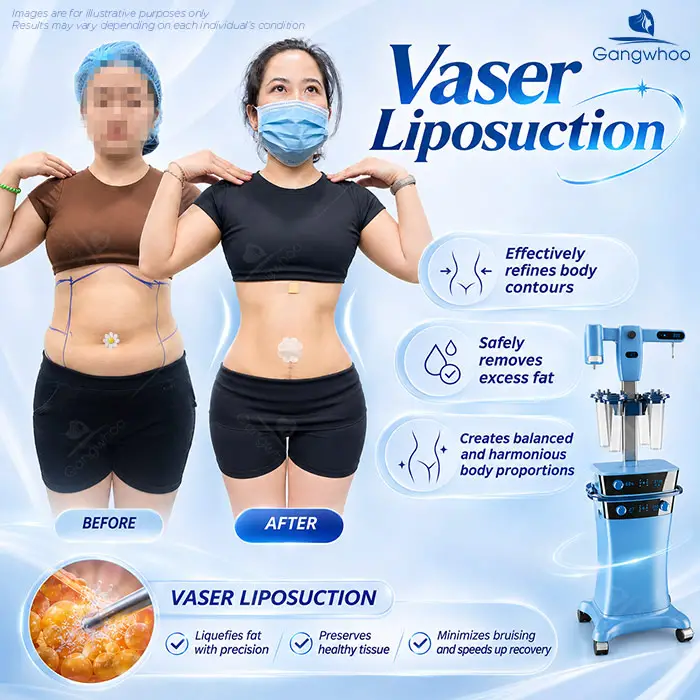
Both traditional liposuction and VASER liposuction aim to remove subcutaneous fat tissue to improve body contours. However, the two methods differ in how fat tissue is processed before aspiration.
With traditional liposuction (Suction-Assisted Liposuction – SAL), the surgeon moves a cannula through the subcutaneous fat layer and uses mechanical force to disrupt and aspirate fat tissue. In contrast, VASER liposuction (Ultrasound-Assisted Liposuction – UAL) adds an ultrasonic energy application step to assist in separating and emulsifying fat tissue before aspiration.
These differences can be understood through several key characteristics:
| Criteria | Traditional Liposuction | VASER Liposuction |
| Mechanism of action | Mechanical force from the cannula | Ultrasonic energy combined with aspiration |
| Fat tissue processing | Direct disruption and aspiration | Assists in separation and emulsification before aspiration |
| Equipment | Cannula and aspiration system | Ultrasonic probe, cannula, and aspiration system |
| Technical requirements | Control of aspiration technique and tissue layers | Control of aspiration technique, ultrasonic energy, and exposure time |
| Specific risks | Tissue damage, contour irregularities, and surgical complications | Additional risk of thermal injury associated with ultrasonic energy |
There is no basis for claiming that VASER always produces better results in every case. The choice of technique should depend on fat volume, connective tissue characteristics, skin elasticity, treatment area, and the surgeon’s experience. A technique suitable for someone with thick adipose tissue may not necessarily be the optimal choice for someone with loose skin or different subcutaneous tissue characteristics.
Who Is a Suitable Candidate for VASER Liposuction?
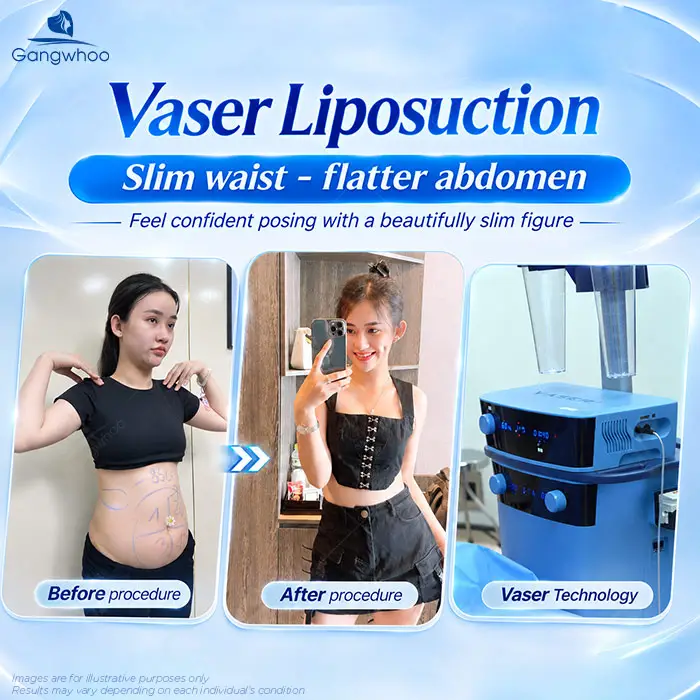
VASER liposuction is generally considered for individuals with localized excess fat, relatively stable body weight, and a desire to improve their body contours. Areas that may be evaluated for treatment include the abdomen, waist, back, thighs, and upper arms.
Individuals who maintain relatively stable eating and exercise habits but still have localized areas of subcutaneous fat that are difficult to improve may undergo a medical assessment to determine whether the procedure is appropriate. In addition to fat volume, the surgeon must evaluate skin elasticity, connective tissue condition, fat layer thickness, and body proportions to develop a suitable contouring plan.
Conversely, not everyone is a suitable candidate for liposuction surgery. Individuals with cardiovascular or respiratory diseases, blood clotting disorders, uncontrolled metabolic conditions, or health conditions that do not meet anesthesia requirements must undergo careful evaluation and management. Pregnant women are also not suitable candidates for elective cosmetic surgery.
In particular, liposuction is not a treatment for obesity and does not replace weight loss through nutrition and exercise. This procedure primarily targets subcutaneous fat in designated areas and does not remove visceral fat located deep within the abdominal cavity.
Therefore, before deciding to undergo VASER liposuction, you should receive an in-person examination by a specialist, undergo an overall health assessment, and determine whether your surgical goals are feasible.
Is VASER Liposuction Safe? Risks You Should Know
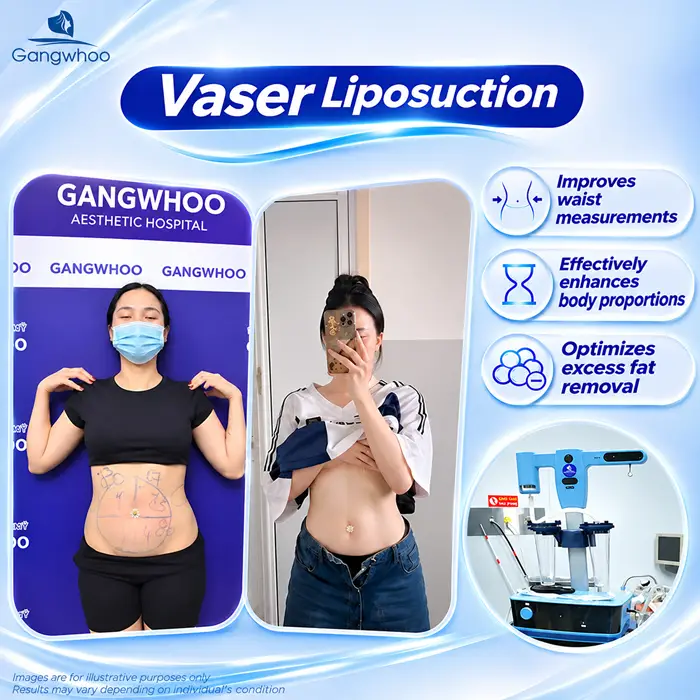
The safety of VASER liposuction depends not only on the equipment but also on surgical indications, surgical techniques, anesthesia methods, and the ability to provide postoperative monitoring. Although it uses ultrasound-assisted technology, this remains an invasive surgical procedure and carries potential risks that must be fully explained to patients.
After surgery, you may experience symptoms such as swelling, bruising, soreness, numbness, or temporary changes in sensation in the treated area. These reactions may occur during the recovery process, with varying severity and duration depending on each individual case.
To minimize risks, the surgeon must conduct a preoperative assessment, review your medical history, medications, and potential risk factors. During surgery, important considerations include controlling the volume of fluid administered, the amount of fluid and fat tissue aspirated, hemodynamic status, and parameters related to the device.
In particular, you should choose a licensed medical facility with adequate surgical capabilities, a qualified medical team, and an anesthesia and resuscitation system that meets the required standards. You should not rely solely on the name of the technology or advertising claims about the equipment to assess the safety of a liposuction procedure.
VASER Liposuction Procedure and Postoperative Care
VASER liposuction typically involves six steps, ranging from consultation and health assessments to surgery and postoperative care. Each stage must be performed according to the surgeon’s instructions to ensure that you meet the requirements for surgery and receive appropriate monitoring throughout recovery.
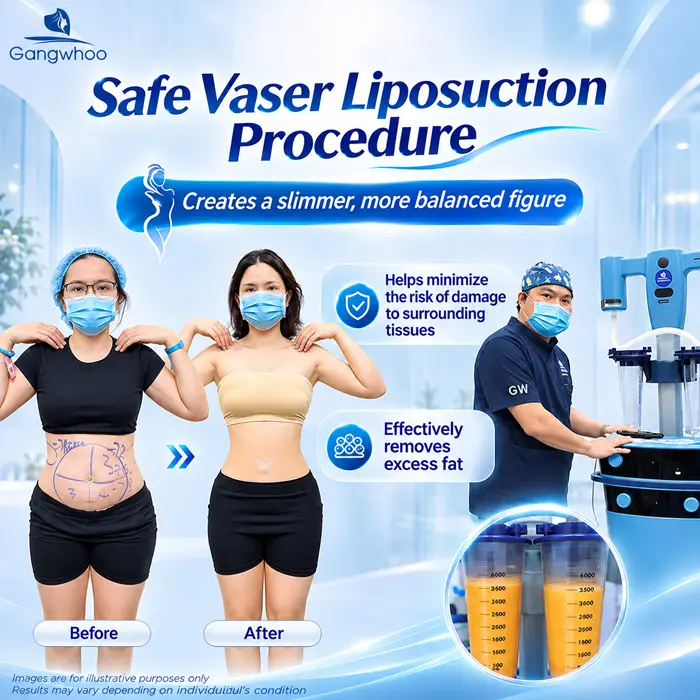
Step 1: Consultation and Identification of Treatment Areas
The surgeon evaluates subcutaneous fat volume, skin elasticity, and body proportions to identify areas that may be treated, such as the abdomen, waist, back, thighs, or upper arms. You will also be asked about your medical history, allergies, current medications, and previous surgical procedures.
Based on these findings, the surgeon assesses your suitability for VASER technology and recommends a contouring approach appropriate for your individual physical condition.
Step 2: Preoperative Health Assessment
Before liposuction, you will undergo a general health examination. Depending on your specific condition, the surgeon may recommend:
- Blood tests: Complete blood count, blood glucose, liver and kidney function, and coagulation parameters.
- Cardiovascular assessment: Electrocardiogram (ECG), when necessary, to evaluate heart function.
- Respiratory assessment: Chest X-ray or additional examinations if indicated.
- Pre-anesthesia evaluation: An anesthesiologist evaluates your medical history, anesthesia-related risks, and selects an appropriate anesthesia method.
You should provide complete information about your current medications, dietary supplements, and any medical conditions you have previously experienced. Instructions regarding fasting, fluid intake, and medication adjustments before surgery must be followed according to your doctor’s recommendations.
Step 3: Surgical Site Marking and Preparation
Before the procedure, the surgeon measures and marks the areas of excess fat to be treated and determines the extent of aspiration based on the contouring plan. This step helps guide the surgical technique and prevents excessive or uneven fat removal between different areas.
You will then be prepared in the operating room, where your medical records and safety requirements will be reviewed. The anesthesia and resuscitation team will administer anesthesia according to the agreed-upon plan.
Step 4: Performing Liposuction Using VASER Technology
The surgeon injects Tumescent solution into the targeted fat tissue, then uses the VASER system probe to deliver ultrasonic energy, assisting in the separation and emulsification of fat tissue.
Next, the cannula is inserted to aspirate the processed fat tissue through a specialized suction system. Throughout this process, the surgeon controls the depth, direction of instrument movement, and amount of fat removed to create balanced contours that complement your body structure.
Step 5: Monitoring in the Recovery Unit
After surgery, you will be transferred to the recovery area for monitoring of your heart rate, blood pressure, respiratory rate, pain level, bleeding, and any abnormal symptoms.
The medical team evaluates your recovery from anesthesia and the condition of the surgical area before determining how long you need to remain at the medical facility. You will only be discharged once the required safety criteria have been met.
Step 6: Home Care and Scheduled Follow-Up Appointments
After discharge, you should take medications exactly as prescribed, keep your incisions clean, and wear a compression garment if instructed by your surgeon. During the initial recovery period, you should engage in gentle movement as directed and avoid high-intensity exercise, heavy lifting, or massaging the treated area without medical approval.
Follow-up appointments are generally scheduled according to the recovery timeline:
- After 1–3 days: Assessment of pain, swelling, incisions, and any abnormal postoperative signs.
- After approximately 7–10 days: Evaluation of wound healing and swelling, along with further care instructions.
- After approximately 1 month: Assessment of soft tissue stabilization, skin retraction, and adjustment of care recommendations if necessary.
- After approximately 3 months: Evaluation of changes in body contours and the recovery progress following liposuction.
These timelines may vary depending on the extent of surgery and your actual condition. If you experience unusually increasing pain, fever, shortness of breath, swelling or pain in one leg, or discharge from the incision, you should contact a medical facility immediately rather than waiting for your next scheduled follow-up appointment.
Gangwhoo Cosmetic Hospital – A Destination for Safe and Effective VASER Liposuction
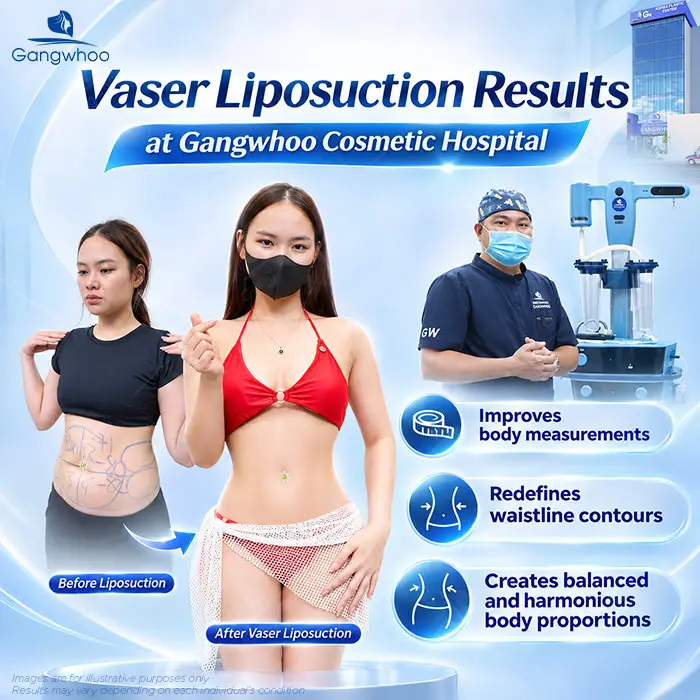
In body contouring surgery, liposuction outcomes depend not only on technology but also on the coordination between equipment, surgical techniques, and medical care conditions. At Gangwhoo Cosmetic Hospital, the application of VASER liposuction technology is incorporated into a surgical system involving plastic surgeons, the anesthesia and resuscitation team, and the postoperative care department.
Gangwhoo invests in a fully enclosed sterile operating room system, combined with an automated disinfection robot to help maintain control over the surgical environment. The surgical facilities are equipped with specialized medical equipment to support procedures and the management of necessary medical situations.
One of the factors contributing to Gangwhoo’s surgical capabilities is its team of doctors with experience in the medical field, professional training, and regular updates on knowledge in cosmetic plastic surgery. In addition to their professional foundation in Vietnam, their participation in educational programs, professional exchanges, and training courses both domestically and internationally provides opportunities to access additional methods, techniques, and emerging treatment trends.
In particular, participation in advanced training programs, specialized seminars, and professional exchange activities gives doctors additional perspectives on anatomical assessment, surgical method selection, and the management of situations that may arise during surgery. This knowledge must be carefully selected, evaluated against actual conditions, and appropriately applied to each individual case.
For VASER liposuction, a surgeon’s experience is demonstrated through the ability to assess fat layer thickness, identify the target tissue layer, control the movement of the probe and cannula, and calculate the amount of fat to be removed from each area. These factors are essential for minimizing uneven fat removal and achieving harmonious body contours that complement the body’s anatomical structure.
In addition to the operating surgeon, the anesthesiology and resuscitation department also plays an important role. Gangwhoo is equipped with the Carestation 620 anesthesia machine and SEVOrane inhalational anesthetic, supporting anesthesia care according to professional indications. Throughout the surgical procedure, the anesthesia and resuscitation team monitors your vital signs and overall condition, coordinating appropriate interventions whenever necessary.
After surgery is completed, you will be transferred to the recovery area and continue to receive monitoring in a dedicated postoperative care unit. Here, your health condition, pain level, swelling, and incisions are assessed before the surgeon provides further postoperative care instructions.
You will receive guidance on medication use, surgical site hygiene, wearing a compression garment if indicated, and when you can resume normal daily activities. Follow-up appointments are scheduled according to your recovery progress so that the surgeon can evaluate wound healing, soft tissue retraction, and body contours following liposuction.
VASER liposuction technology uses ultrasonic waves to separate subcutaneous fat tissue before aspiration, assisting surgeons in refining body contours. To choose the appropriate method and minimize potential risks, contact Gangwhoo Cosmetic Hospital today for consultation and support!