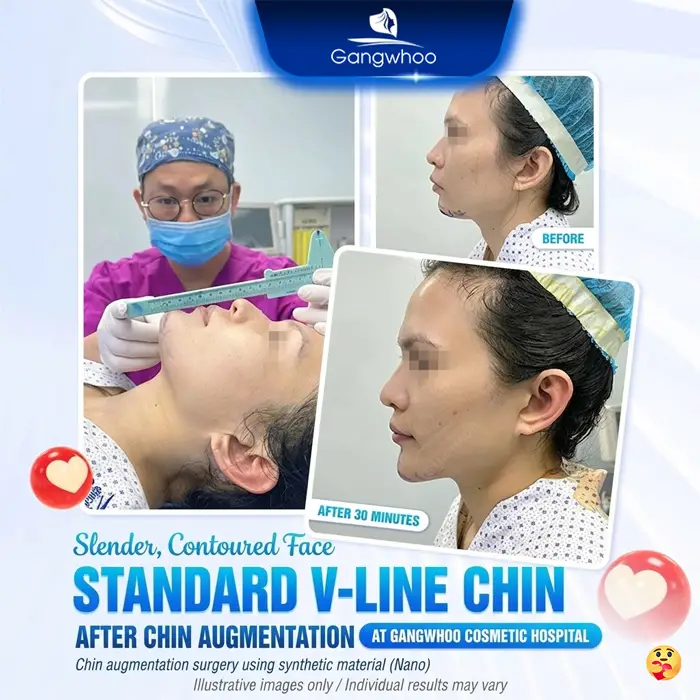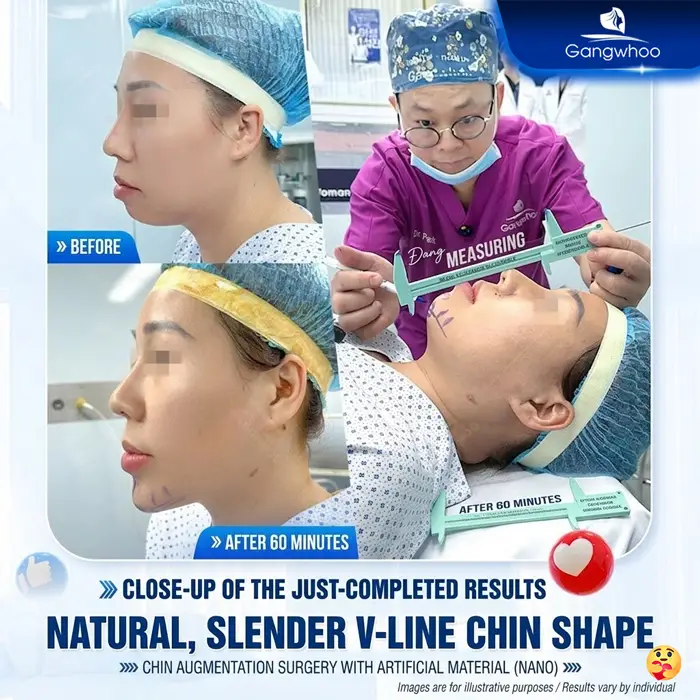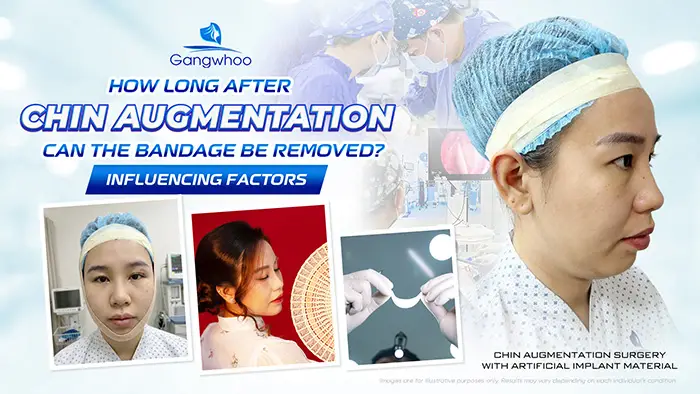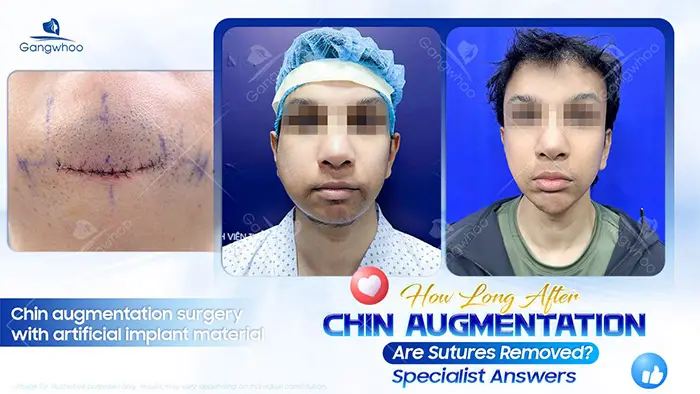



“How long does it take for dissolvable sutures to absorb after chin augmentation?” This is a question I frequently receive from patients following surgery at Gangwhoo Cosmetic Hospital. With more than 15 years of experience in cosmetic plastic surgery, I understand that the postoperative period plays a crucial role in determining both aesthetic results and long-term safety.
In most cases, if dissolvable sutures are used to close the incision inside the oral mucosa, the absorption time typically ranges from 7–14 days. For sutures placed in deeper tissue layers under the skin, the absorption process may take several weeks to several months, depending on the suture material and each individual’s healing response. To understand this more accurately, it is necessary to analyze the surgical technique and the type of sutures used.
What Are Dissolvable Sutures in Chin Augmentation Surgery?
Dissolvable sutures (absorbable sutures) are stitches that the body gradually breaks down through hydrolysis or natural enzymatic processes. In chin augmentation surgery, we commonly use sutures such as Vicryl or Monocryl for closing the mucosal and soft tissue layers.
The main advantage of dissolvable sutures is that they do not require removal, which helps avoid additional intervention in the surgical area and reduces the risk of infection. However, each type of suture maintains tensile strength for a different period. For example:

- Some sutures maintain wound support for about 7–10 days.
- Others maintain tensile strength for 3–4 weeks before fully dissolving.
At Gangwhoo Cosmetic Hospital, the choice of suture material is not based solely on aesthetic considerations but also depends on the chin tissue structure, mucosal thickness, and the surgical approach (intraoral incision or external skin incision).
How Long Does It Take for Sutures to Dissolve After Chin Augmentation? Analysis by Suture Location
1. Intraoral Sutures (Most Common Case)
Approximately 90% of chin augmentation procedures today are performed through an incision inside the lower lip mucosa. With this technique:

- Dissolvable sutures usually absorb within 7–14 days.
- In some cases, a small remaining suture thread may still be present until the third week, but this is generally harmless.
The oral mucosa has a rich blood supply, which allows wounds to heal faster and sutures to dissolve more quickly compared to external skin areas.
2. Deep Tissue Sutures for Implant Stabilization
When placing artificial implants (such as silicone or ePTFE), surgeons may secure the fibrous capsule or chin muscle fascia with sutures. These sutures may maintain strength for about 3–6 weeks, gradually dissolving completely within approximately 60–90 days.
Patients usually do not notice this process because the sutures are located deep beneath the tissues.
3. Cases Using Non-Absorbable Sutures
In rare situations, such as procedures performed with an external skin incision, the surgeon may use non-absorbable sutures and schedule removal after 5–7 days. However, at Gangwhoo, I generally prioritize dissolvable sutures to improve the postoperative experience for patients.
Factors That Affect the Absorption Time of Sutures After Chin Augmentation
The time required for sutures to dissolve is not identical for everyone. Based on clinical experience, I have observed four key factors:

First is the type of suture material. For example, Vicryl tends to dissolve faster than some other synthetic sutures.
Second is the patient’s biological healing response. Smokers, people with diabetes, or those with weakened immune systems may experience slower wound healing.
Third is the environment of the incision site. The oral mucosa is constantly moist, which allows sutures to dissolve faster than those placed on dry skin surfaces.
Finally, postoperative care plays an important role. Poor hygiene or infection can cause uneven suture absorption and even trigger inflammatory reactions.
When Should You Return for a Check-Up if Sutures Do Not Dissolve Properly?
Over more than a decade of performing surgeries and monitoring postoperative recovery, I have found that most patients heal normally. However, you should return to Gangwhoo Cosmetic Hospital if you experience:

- Increasing pain after 7 days.
- Persistent swelling and redness lasting more than 2 weeks.
- Pus discharge or unpleasant odor in the oral cavity.
- Unusual hard lumps around the surgical area.
In rare cases, a “suture granuloma” may form. When this occurs, the doctor can perform a minor procedure to remove the remaining suture material.
How to Care for Dissolvable Sutures After Chin Augmentation
In clinical practice, I often find that concerns surrounding the question “how long does it take for dissolvable sutures to absorb after chin augmentation” actually arise from improper postoperative care. Dissolvable sutures are designed to be naturally absorbed by the body, but this process only occurs smoothly when the surrounding tissues remain stable and free of infection.
Below are detailed care guidelines based on each stage of recovery, drawn from practical surgical experience at Gangwhoo Cosmetic Hospital.
1. First 24–72 Hours After Surgery: Controlling Inflammation and Swelling
This stage determines the initial inflammatory response. If not properly managed, prolonged swelling may affect the suture absorption process.
During the first three days, patients should keep the chin area stable and avoid laughing loudly, talking excessively, or opening the mouth too wide. These movements increase tension on the sutures inside the lower lip.
Oral hygiene should be performed gently using the prescribed antiseptic mouthwash. Avoid rinsing vigorously, as strong water pressure may loosen the suture knots.

Your diet should consist of soft, cool foods while avoiding hot or spicy meals, as heat can dilate blood vessels and increase swelling.
2. Days 4–10: Tissue Healing Phase
At this stage, many patients begin asking how long dissolvable sutures take to absorb because they may feel the threads inside the mouth. This sensation is completely normal.
During this phase, the mucosal tissue is actively regenerating. Oral hygiene must be maintained after each meal to prevent food particles from accumulating around the suture knots, which is a common cause of localized inflammation.
Do not pull or touch the sutures with your fingers or tongue even if they feel uncomfortable. I have seen many cases where patients attempted to remove sutures themselves, reopening the wound and prolonging recovery.
Follow-up visits are essential. Your doctor will evaluate suture absorption and check the stability of the chin implant.
3. After Two Weeks: Sutures Begin to Dissolve More Noticeably

With the intraoral suturing technique used at Gangwhoo Hospital, most dissolvable sutures soften and shorten within about 7–14 days.
If a small piece of suture remains visible by the third week but there is no swelling or pain, it is usually just leftover material that will naturally fall out. However, if pain increases, redness spreads, or pus appears, you should seek medical attention immediately as these may indicate inflammation or a suture granuloma.
4. Things to Avoid to Ensure Proper Suture Absorption
Based on more than 15 years of facial plastic surgery experience, I have observed three common mistakes that can delay suture absorption:
First is smoking too soon after surgery. Nicotine causes blood vessel constriction, reducing tissue blood flow and slowing healing.
Second is alcohol consumption during the first two weeks. Alcohol can affect immune responses and collagen regeneration.
Third is failing to follow prescribed antibiotics or anti-inflammatory medications. Persistent inflammation may cause uneven suture absorption and increase the risk of infection.
In most intraoral chin augmentation cases, sutures dissolve within 7–14 days. For deeper tissue layers, the process may take longer depending on the type of suture material and individual healing characteristics. This is a normal physiological process when surgery is performed correctly and postoperative care instructions are followed.
At Gangwhoo Cosmetic Hospital, my team and I strictly follow surgical procedures that meet Ministry of Health safety standards and select the most appropriate suture materials for each case to optimize recovery.
If you still have concerns after surgery or are considering chin augmentation, you should visit the clinic for a direct evaluation and personalized consultation. Every face has a unique anatomical structure, and achieving the best result requires practical experience, not just theory.